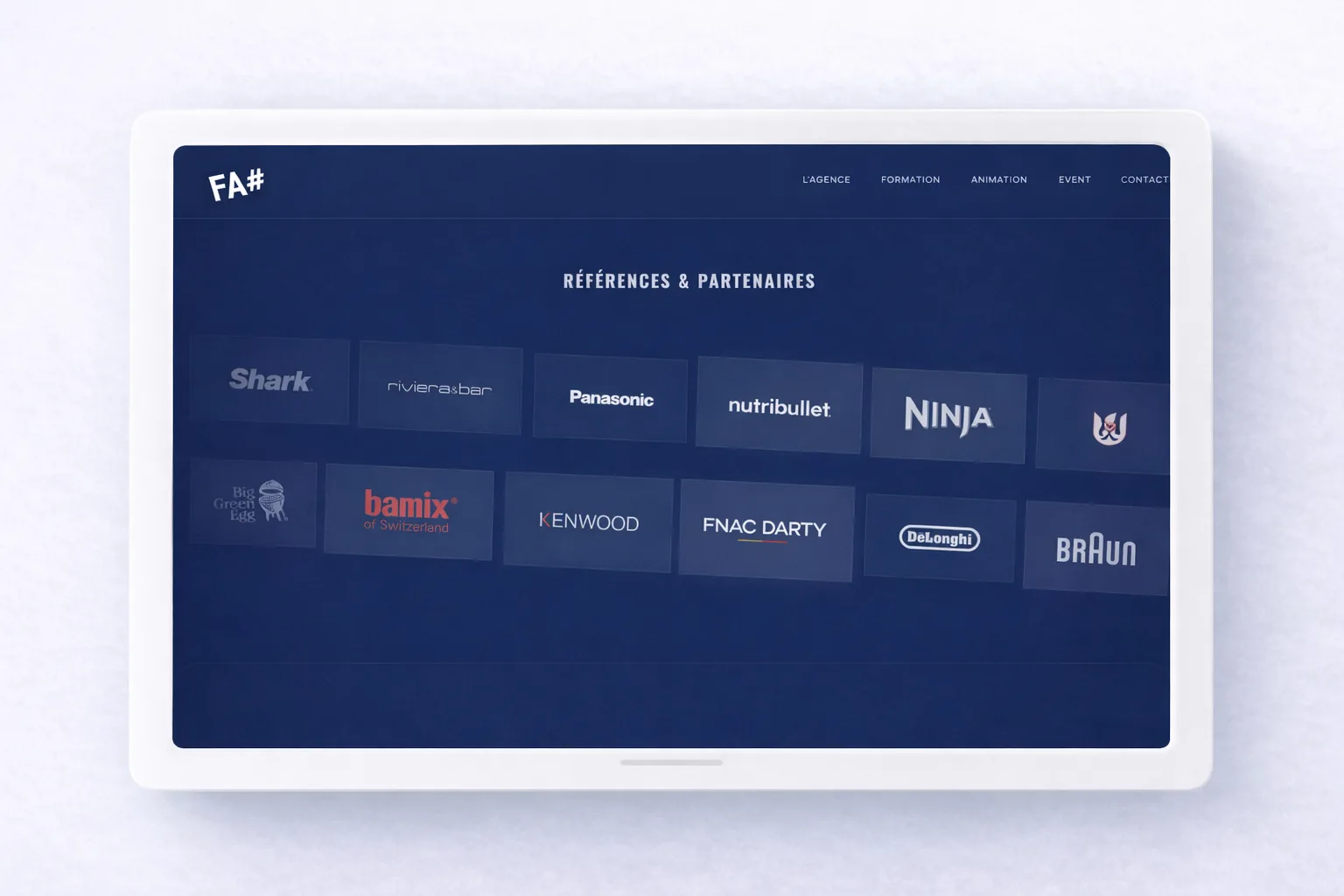
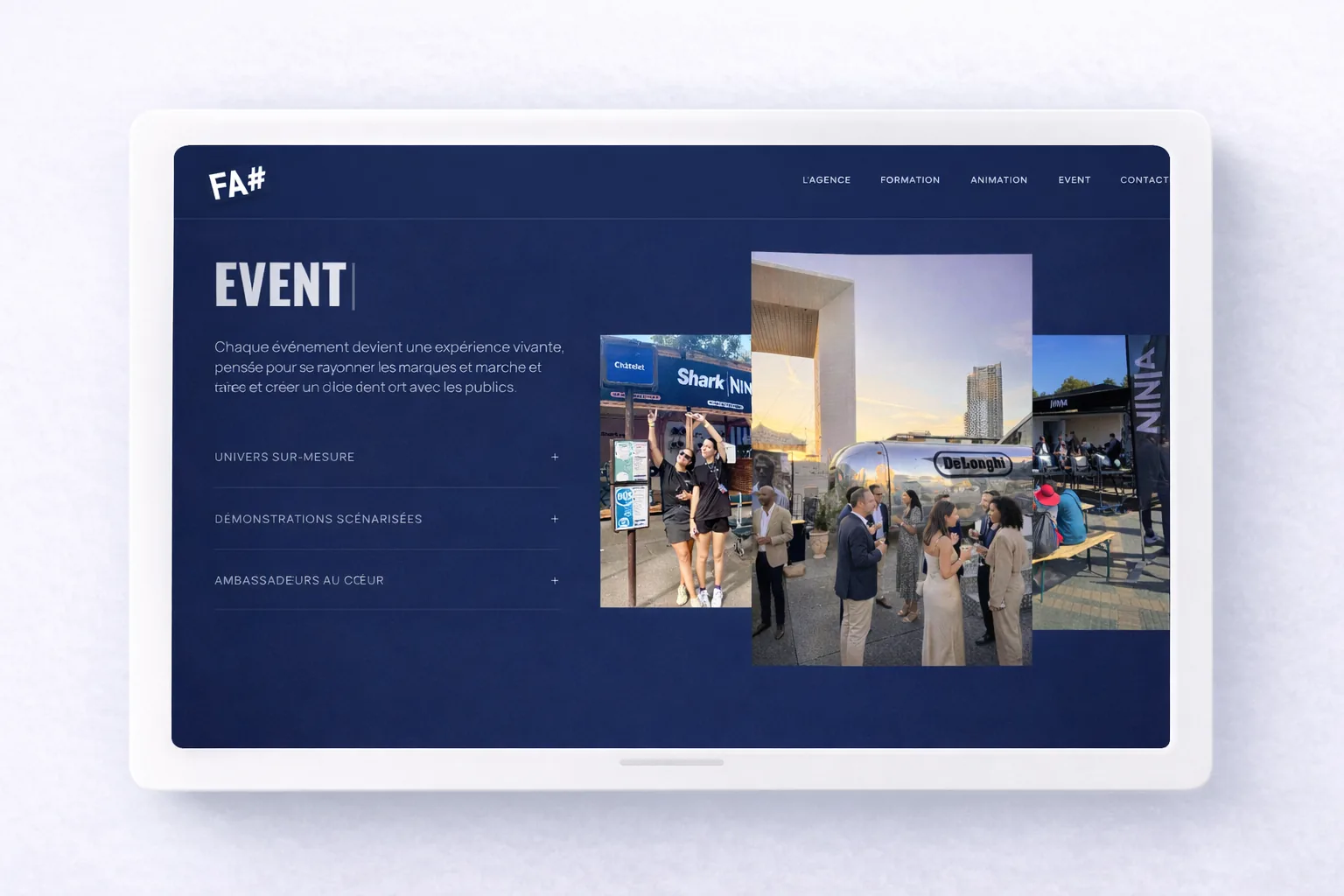
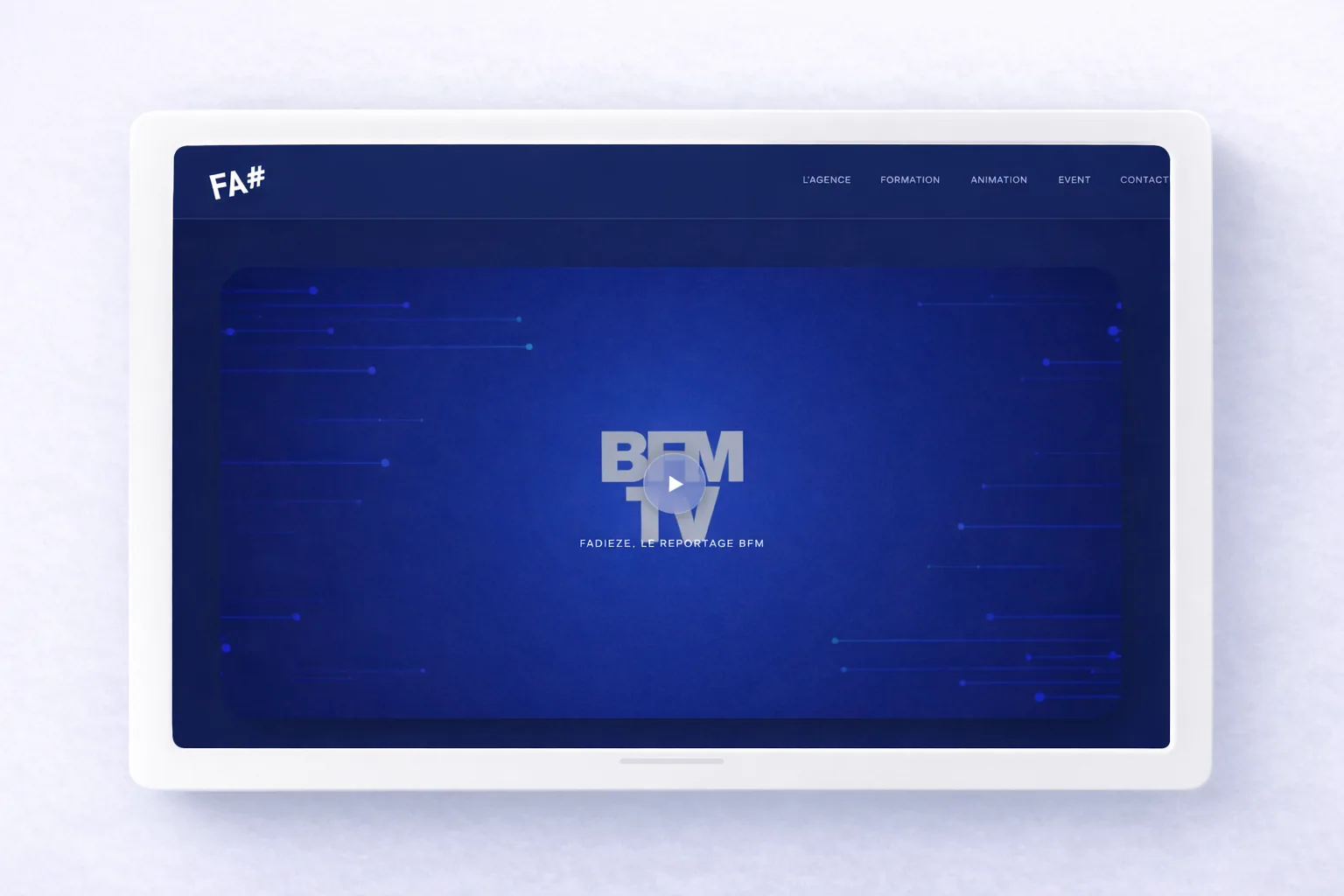
We designed a React platform built for commercial performance: immediate value proposition, structured product demonstration, and a clear path to qualified inbound requests.
React
Design system
Demo funnel
Video proof
Context
Fadieze had a critical issue: valuable traffic was not converting into qualified opportunities. The core friction came from unclear product hierarchy and a journey that did not clearly guide decision-making.
The project had to go beyond visual redesign. We needed to rebuild commercial narrative, structure proof blocks, and remove friction before contact intent.
Objective: transform an informative website into an acquisition asset that pre-qualifies inbound demand.
Approach
We implemented a conversion-oriented React architecture: strict information hierarchy, progressive demo sequencing, social proof modules, and CTA placement aligned with intent moments.
Content was reframed around real objections: offer clarity, execution credibility, and clear next action. This reduces cognitive load and increases decision confidence before contact.
Each section was designed as a decision step: understand, validate, project, act.
Technical architecture
The React front-end uses a modular structure to support fast iterations without breaking global consistency. Core components (hero, proof, CTA, demo blocks) were standardized for maintainability and performance.
We also optimized responsive continuity and trust signals to keep conversion intent stable on both mobile and desktop contexts.
Execution model
Delivery followed short sprints: message framing, funnel structuring, then friction-point optimization. This sequence enabled fast validation of editorial and UX decisions.
The team now has an operational framework to evolve pages without losing commercial clarity.
Results
Fadieze now has a stronger commercial asset: faster offer comprehension, clearer demo progression, and higher-quality inbound requests.
The main gain is structural: a platform that does not just explain the product, but actively organizes buyer decision flow.
Clear messageValue understood in seconds
Conversion pathEach block drives the next action
Credible proofTrust signals visible and actionable
Measured outcomes
Every deployment is tracked with business and operational KPIs. Depending on scope, metrics are consolidated at 30, 60, and 90 days to prioritize the next optimizations.
ConversionConversion rate, lead quality, and average order value
Time savedHours recovered from admin tasks and manual follow-ups
ReliabilityError rate, critical incidents, and avoided rework
ROIMargin protected, operating cost, and processing speed
Cross-checked sources: analytics, CRM, business database, and automation logs for dependable reporting.
Constraints and decisions
The website had to highlight product demos while staying fast, clear, and conversion-oriented.
ConstraintBalance visual impact, front-end performance, and SEO requirements in a dense product context.
Architecture choiceModular React build with content hierarchy designed for both crawlability and commercial clarity.
Execution decisionPrioritize conversion readability and render speed over decorative, non-essential effects.
Business effect: stronger sales credibility, better indexing, and easier long-term evolution.
Continuous steering and decisions
The project is run with a continuous-improvement logic: each change is linked to a concrete operational metric and a clear business objective.
Regular reviews allow fast trade-offs between UX quality, technical reliability, and team workload. This prevents expensive iterations that add little measurable value.
Outcome: more stable execution over time, better leadership visibility, and a system that keeps performing as volume grows.
CadenceRegular review of KPIs, incidents, and priorities
Trade-offsDecisions driven by measurable business impact
ReliabilityTargeted controls on high-risk steps
EvolutionActive backlog and executable roadmap
Goal: maintain premium execution standards without losing operational control.